The short answer
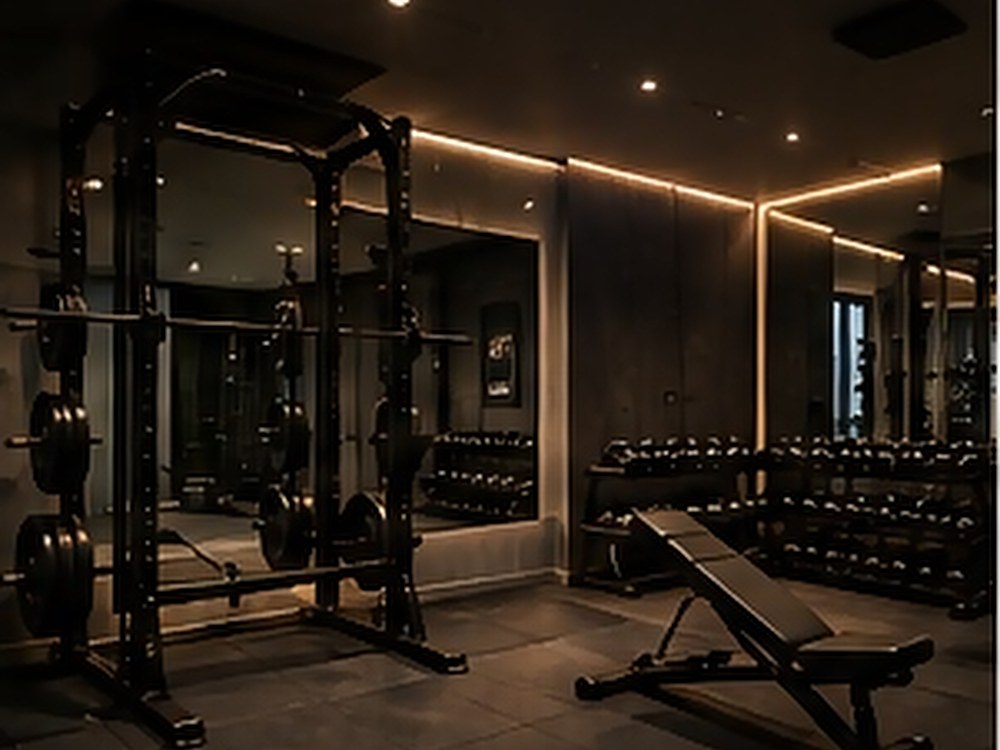
For a fully designed and built private gym — not a rack on a rubber mat, but a finished room with proper flooring, lighting, ventilation, mirrors, storage and equipment — a realistic range in 2026 is £25,000 to £60,000. Higher specifications with premium equipment, air conditioning, AV and a sauna or cold plunge typically run £60,000 to £100,000 and above.
A simpler conversion with a straightforward specification — what we call an Essential-level room — starts from around £15,000. Below that figure you are generally buying equipment and flooring rather than a room.
On a typical £40,000 project, roughly a fifth is equipment and storage. The rest is the room: labour, materials, services, and the design and project management that hold it together.
What drives the cost up
1. The condition of the shell
This is the single biggest variable. An attached garage built in the last forty years usually needs insulation, a damp-proof membrane, a levelled floor and new electrics — significant work, but predictable. A Victorian cellar may need tanking, structural underpinning of a doorway, a lowered floor to gain head height and a full drainage solution. The same gym can differ by £15,000 on shell work alone.
2. Ceiling height
Height determines what you can train. Overhead pressing, pull-ups and any rig with a chin-up bar need clearance most garages technically have and most cellars do not. Gaining height by lowering a floor is possible but expensive, and it changes the project from a fit-out into a structural job.
3. Floor loading
Ground-floor slabs generally take dropped weight without complaint. Suspended timber floors and first-floor rooms are a different matter — a stack of bumper plates and a deadlift platform represent a concentrated load the floor was never designed for. Where reinforcement is needed we specify it at survey and price it, rather than discovering it halfway through.
4. Equipment specification
A functional set-up — rack, bar, plates, adjustable bench, dumbbells to 40kg, a decent cardio piece — sits comfortably in the £8,000 to £15,000 range. Commercial-grade selectorised machines, a full dumbbell run to 50kg and a premium treadmill or bike can take that past £40,000 on its own. Equipment is the easiest place to phase spending, because it can be added later; the room cannot.
5. Climate control and ventilation
The most commonly skipped item and the most commonly regretted. A sealed, insulated room with two people training in it becomes unpleasant within twenty minutes without mechanical ventilation, and moisture has to go somewhere. Air conditioning with heating adds several thousand pounds; leaving it out reliably costs more later.
An example £40,000 gym
| Element | Indicative |
|---|---|
| Design, drawings and project management | £4,000 |
| Shell works — insulation, damp, plastering, joinery | £11,000 |
| Electrics, lighting and AV | £5,500 |
| Ventilation, heating and cooling | £4,500 |
| Specialist flooring and mirrors | £4,500 |
| Equipment and storage | £8,000 |
| Decoration, styling and finishing | £2,500 |
Indicative only, and excluding VAT where applicable. Every project is quoted individually after a survey.
What we would tell you to spend on first
If the budget is tight, the order that produces the best room is: fabric and damp, then floor, then ventilation, then lighting, then equipment. Equipment is visible and satisfying and everyone wants to start there — but a gym with excellent kit in a cold, damp, badly lit room does not get used, and a gym that does not get used was not worth building.